
Game Idea: Server Farm Simulator Tycooninator
Pitch
The backend of game dev tycoon, where the player maintains and fixes issues that occur when a web site or video game becomes too popular.


The backend of game dev tycoon, where the player maintains and fixes issues that occur when a web site or video game becomes too popular.

Game Idea: Fun Physics Evolution (Think Spore with less realistic evolutionary history)
What spore tried to create was a game about a single celled organism, following its biological descendants as it tries to follow the same evolutionary track as humans. The interesting parts of this were the evolutionary choices that the player presided over the creature that it created, e.g. long legs but stubby arms emphasizing defense over aggression, eyes predominantly higher on the creature to see objects and other creatures at a distance, no mouth making communication and “making friends” with other creatures next to impossible, these are all fun and biologically interesting aspects about the game. It takes real life animal psychology, animal biology and evolutionary postulation and tries to convey and teach these aspects in the most passive of ways, where the player isn’t reading text and trying to absorb information in order to progress (i.e. Edutainment games) but where the player sees their failures in their creature creation because they forgot to put eyes on so it can’t see it’s environment making surviving, or even simply navigating, a difficult task.

What makes a room easier to navigate, items easy to discover, paths easily discerned? Intricately crafted scenes, artistic renditions of the imagination to a tangibly-cognizant interact-able space are all important, but how is the player going to be interacting with the scene created?

Continue reading “Game Design: Color Design and Palette Choice”


There’s also something to say about the user scores in all of the pictures. There is a trend that Users are grading games more harshly than the past. You can attribute this to the hedonic treadmill, where our future experiences require more novelty in order to get enjoyment due to the worn out novelty from past experiences. Or, you can attribute this to fanboys and ragewars about a game, franchise or console allegiance. Or, you can even attribute some of this to it being easier to hate on something than to find redeeming qualities in a piece of creation.
All data was collected from Metacritic.com around April 30th, 2014, graphed with Tableau.
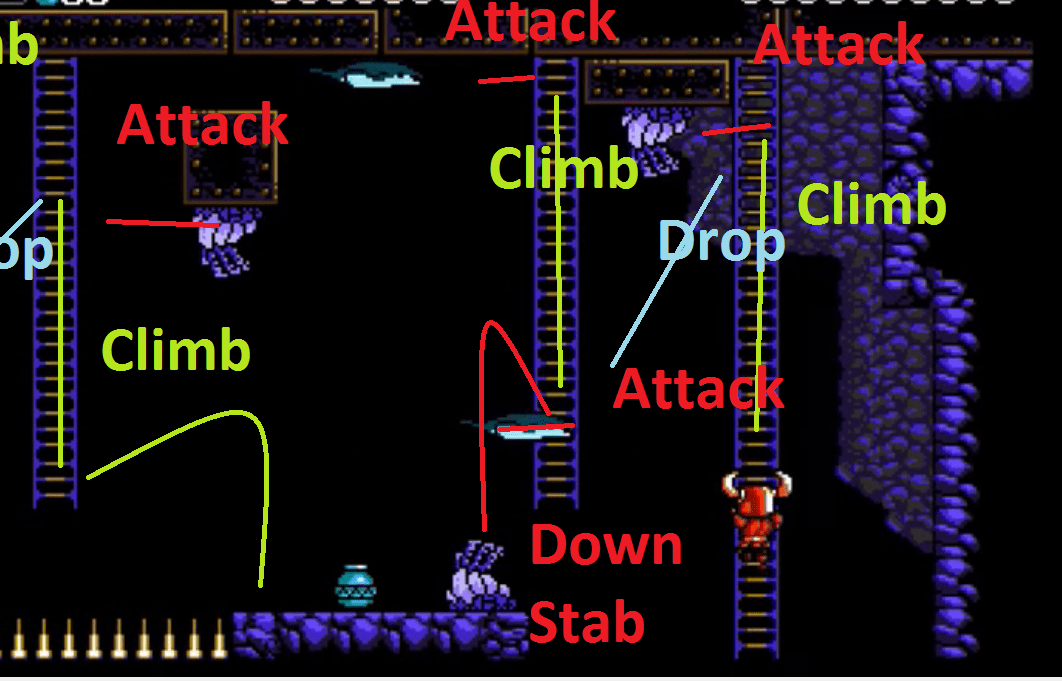
I know I talked about it before, but Shovel Knight is probably one of the few games this year that I was hard-pressed to put down. Aside from being a fun Castlevania-Megaman style Platformer, attached is a great soundtrack, a style that references games of the past but is still able to carve out its own image and gameplay that is never “too easy” or “too hard” but consistently finds the middle ground to keep the player lingering in the “I know I can complete this” mentality.

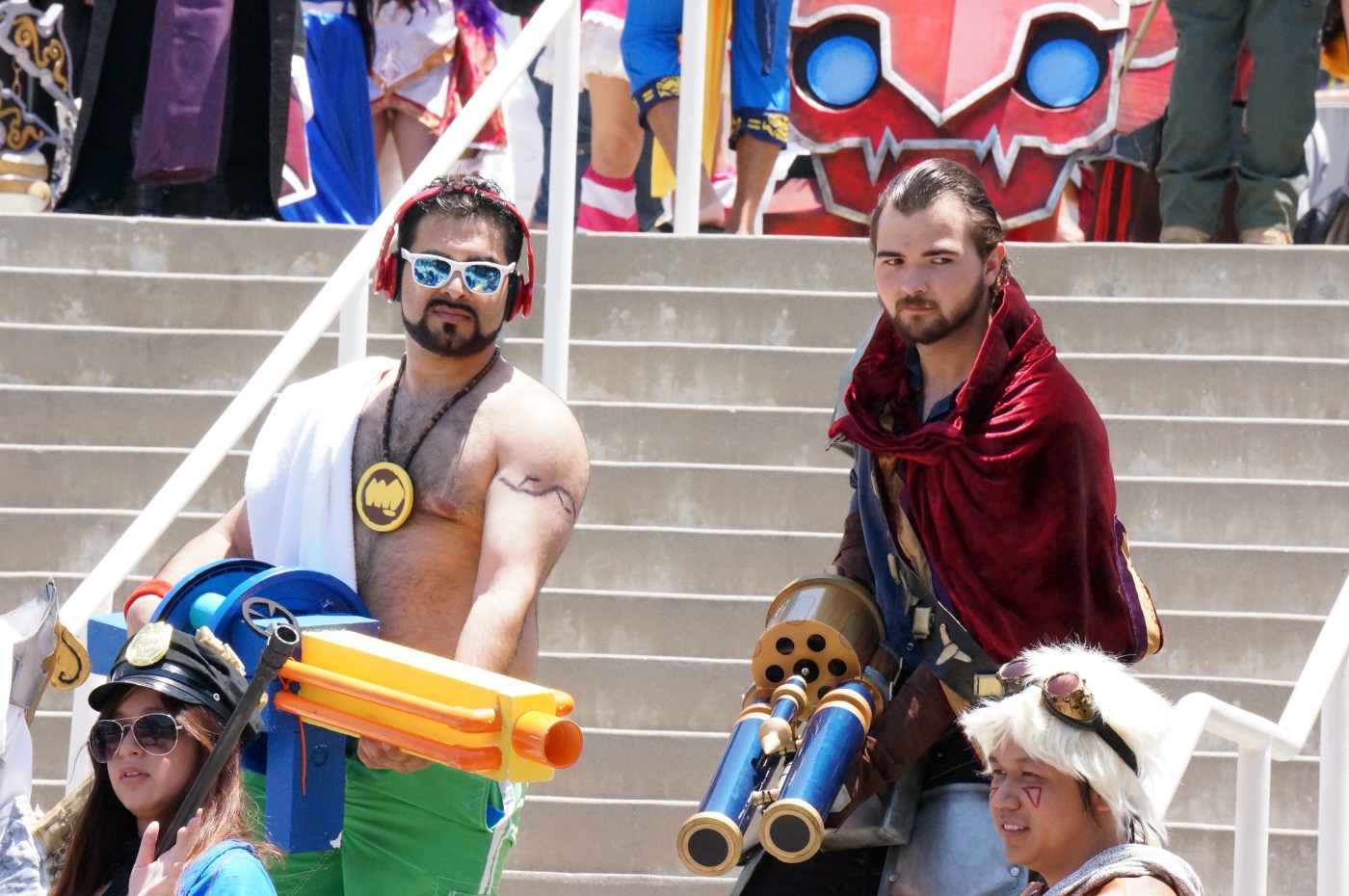


I might’ve had more pictures than this, but the gathering area was entirely too small for the amount of people. Mixing that with the heat wave that participated with the entrants to the con, we were all fighting for cooler locations to photograph. Tried to make better accommodations for other gatherings, but it was a shame that this one had to take the hit as far as quality of quantity

Previous posts in the Series Teaching the Player
And a link to the part 1
The Speed Running community is a fantastic example of people who take every opportunity to transition all games from a Reaction to Planned Gameplay. They approach every game with its predefined rules and regardless of how well a game teaches you a mechanic, the speed runners put in the time to perfect the most opportune route and routine in getting from the start to the end of the game. They epitomize the idea of “Reaction Gameplay + Time = Planned Gameplay” by learning all of the inadequacies of the player’s abilities and the gamespace’s rules and manipulating them to get a more optimized path for faster completion, and shaving frames, seconds or even minutes off of runtimes by understanding what can be done by the player and what will happen in the gamespace when the player performs the action.
Continue reading “Teaching the Player p2.2 – More on Reactive vs Planned Gameplay”

Past Articles in the series can be found here
Old Man: It’s dangerous to go it alone. Here, take this.
Link: But, what am I supposed to do with it?
Old Man: <shrugs>
Some of the more thrilling parts of life are the times that you’re anxious, you don’t know what’s coming up, but it’s approaching fast and all you can do is traverse yourself through it. You’re given something new and unexpected and you are forced to adapt with the goal of thriving in a new environment. This can also be a source of fear and concern because you aren’t in the normal comfort zone that you once thrived in when getting to this point, yet you’re expected to perform at the high quality that got you to this point? You don’t even know if the rules have changed at this point, the tools being the same, or the uses of any new tools that you may come across.
Of course I’m referring to game design and not my previous post, silly person. But why can’t these causes for frustration and anxiety translate between gaming and real life? If the tools you’re given aren’t explained to you and the tasks that are presented to you require a certain level of proficiency using those tools, how are you supposed to operate at a level of high proficiency?
Continue reading “Teaching the Player p2: Reactive vs Planned Game Design”
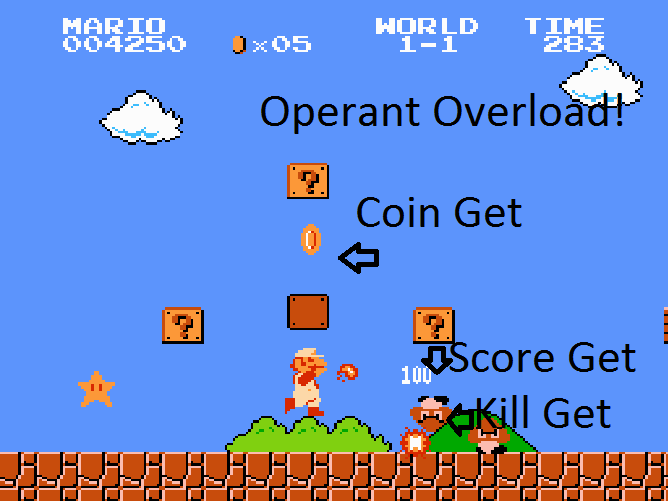
I had a game idea floating around for a while and only just started implementing it heavily over the past week. That might not be completely true, I’ve been working off and on for the past month but had too much going on to devote any meaningful time on it. I’m hoping that writing about it will help me get a better understanding of the game and maybe solidify any ambition with the project.
Idea: Deprogram your habits
The only way to reprogram out habits is to know what our habits are, so we need someone that learns our habits and forces us to unlearn our habits. In Behavior Psychology, we know that our habits become reinforced when our reward systems are triggered by our actions. Good rewards to actions reinforcing the belief that our actions are good. Hitting the ‘?’ block gives a rewarding sound, coin +1, power-up which reinforces the action for players to hit ‘?’ blocks as they appear in hopes of more “rewards” of appearing. Slashing the tall grass in Zelda teaches the player that life hearts, rupees, free weaponry can be found and when we are in need of that reward, we reinforce that habit by performing the action of slashing the tall grass. (Music Change) When we know we will be rewarded, we become more likely to perform actions that propagate that reward.
 GameIntrospection