Search

GameIntrospection

Love and Hate for Gaming @GIntrospection

Tag

Game Development

Game Idea: Transfer Powers from Strong Allies to your Character

Game Idea: To get stronger, you have to take the power of you allies (power transfer)

Game:

The mechanics are simple. For your main character to get stronger, e.g. better stats, higher level, more weapons or abilities, your allies in combat have to get weaker. You start with a level 1 sack of potatoes with little ability of his own but is accompanied by one or two bad ass no-McGuffin types. As you play through the game, the player gets chances to steal the powers of his allies to make himself stronger. You can balance this out by requiring the use of each character throughout the game, so you have choice of power-transfer but you make parts of the game harder for yourself.

Continue reading “Game Idea: Transfer Powers from Strong Allies to your Character”
New Controllers Brings New Interactions in Games

Yes, yes. Bad, we get it. Christ, that joke is older than the internet.

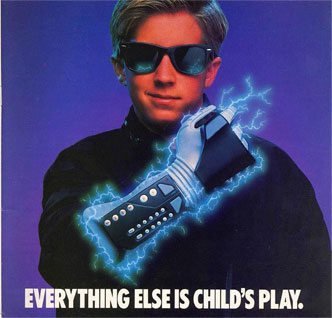
Remember when the Powerglove was supposed to be revolutionary? A kids imagination running wild with fantasies about moving Link or Mario around with just a flick of the wrist , an attack with a finger twitch, and a jump with a twist it. But this was still not as intuitive partly because the Powerglove was an elephant’s turd, but also because the games weren’t built for controls other than the native controller. This is also why the gimmicks of the Wii and all of its peripherals seemed like gimmicks, because they felt like after-thoughts to the game instead of being involved in the initial inspiration of the game.

Arcade games had a better potential with these kinds of non-directional pad controllers because they had a game in mind where non-d-pad interaction was part of the core design. Light-gun games where you shoot the screen, punching games where you hit a physical pad, dancing games where you mash buttons on the floor. Having the space for peripherals outside of the d-pad helped inspire completely different genres of games or, at the very least, re-interpret the genre in a different way to help spawn different types of games.

Continue reading “New Controllers Brings New Interactions in Games”

Game Idea: Computer-Pandemic

Game Idea: Computer Anti-Rx (Computer Virus Pandemic)

Game:

The game pandemic is about creating a type of infection (bacteria, fungal or viral) and designing it in a way that will cause the world’s population to become infected and die from it. As your infection spreads through more of the population, you can upgrade the infection to be more resilient to the weather, easier to spread, or more severe symptoms and side-effects after caught. The more people you infect and the easier the symptoms are to notice, the quicker people start to find treatments for and treat the symptoms. So the upgrades need to start moving towards defenses against antivirals (and the like).

Compu-geddon takes a similar approach, but instead you engineer a computer exploit (worm, virus, web-hack) to infect as many computers as possible. As the exploit becomes more permissive throughout the ecosystem, the easier it might be discovered. But the more people who you can infect, the more valuable your exploit becomes.

Continue reading “Game Idea: Computer-Pandemic”

Game Idea: Blindfolded (e.g. Blind Unfinished Swan)

Game Idea: Blindfolded (Blind Unfinished Swan)

Game:

What Unfinished Swan did was create a world devoid of color where it was the player’s job to put color back into the world to navigate through it.

The idea for Blindfolded is that instead of adding color to navigate through the world, the sound that you generate by moving through it paints the world in front of the player for a short time. Like the image perception that bats have with their echo location, Ben Affleck from that horrible Daredevil movie or Toph has in Avatar: The Last Airbender.

And with great sight comes things your can't un-see.
And with great sight comes things your can’t un-see.

Continue reading “Game Idea: Blindfolded (e.g. Blind Unfinished Swan)”

Game Idea: Server Admin Simulator

Game Idea: Server Farm Simulator Tycooninator

Pitch

The backend of game dev tycoon, where the player maintains and fixes issues that occur when a web site or video game becomes too popular.

They grow up and obsolete, so fast. Time for the garbage dump

Continue reading “Game Idea: Server Admin Simulator”

Teaching the Player p2: Reactive vs Planned Game Design

                Past Articles in the series can be found here


Old Man: It’s dangerous to go it alone. Here, take this.

                Link: But, what am I supposed to do with it?

                Old Man: <shrugs>


Some of the more thrilling parts of life are the times that you’re anxious, you don’t know what’s coming up, but it’s approaching fast and all you can do is traverse yourself through it. You’re given something new and unexpected and you are forced to adapt with the goal of thriving in a new environment. This can also be a source of fear and concern because you aren’t in the normal comfort zone that you once thrived in when getting to this point, yet you’re expected to perform at the high quality that got you to this point? You don’t even know if the rules have changed at this point, the tools being the same, or the uses of any new tools that you may come across.

Of course I’m referring to game design and not my previous post, silly person. But why can’t these causes for frustration and anxiety translate between gaming and real life? If the tools you’re given aren’t explained to you and the tasks that are presented to you require a certain level of proficiency using those tools, how are you supposed to operate at a level of high proficiency?

Continue reading “Teaching the Player p2: Reactive vs Planned Game Design”

Game Idea: The Chase

I had a game idea floating around for a while and only just started implementing it heavily over the past week. That might not be completely true, I’ve been working off and on for the past month but had too much going on to devote any meaningful time on it. I’m hoping that writing about it will help me get a better understanding of the game and maybe solidify any ambition with the project.

Idea: Deprogram your habits

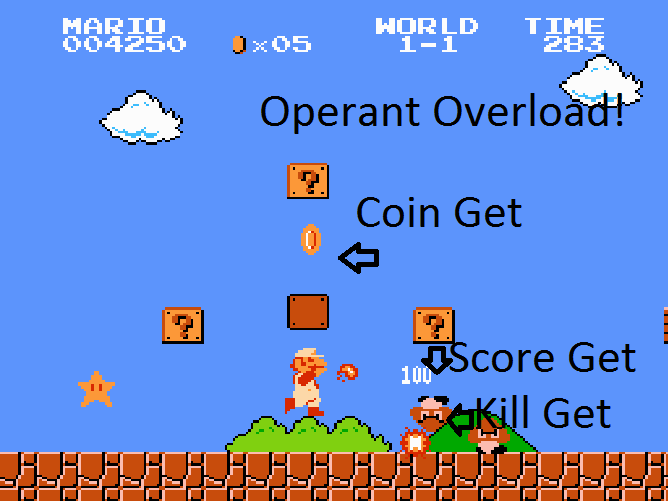
The only way to reprogram out habits is to know what our habits are, so we need someone that learns our habits and forces us to unlearn our habits. In Behavior Psychology, we know that our habits become reinforced when our reward systems are triggered by our actions. Good rewards to actions reinforcing the belief that our actions are good. Hitting the ‘?’ block gives a rewarding sound, coin +1, power-up which reinforces the action for players to hit ‘?’ blocks as they appear in hopes of more “rewards” of appearing. Slashing the tall grass in Zelda teaches the player that life hearts, rupees, free weaponry can be found and when we are in need of that reward, we reinforce that habit by performing the action of slashing the tall grass. (Music Change) When we know we will be rewarded, we become more likely to perform actions that propagate that reward.

This game is gonna make me Operant Learn all over my new jeans, damnit.

Continue reading “Game Idea: The Chase”

Dialogue Delivery part 3: The Wind Blows Long

When a character speaks, the player listens. When a character speaks too much, the player tunes out. Continuing with our look at Dialogue Delivery systems, we still need to look at when character-paced acting is mixed with dialogue as a means of delivering story, character development and plot points. The previous two can be found here and here which discuss Player-paced storytelling and character-paced dialogue-less storytelling, respectively.

There are various means for pushing dialogue onto the player. Text-based, dialogue-based, interpretive gestures and symbols. I don’t want to focus too heavily on what they are actually delivering, but instead focus on how each will be received.

Information delivery is important to think about when designing a game because you’re asking a lot of the player as they try and soak in the information presented. You’re dropping the player into a conversation among other people and expecting them to take the conversation as seriously as the other participants. If there is too much information, it becomes a chore to participate in the conversation.

Continue reading “Dialogue Delivery part 3: The Wind Blows Long”

Create a free website or blog at WordPress.com.

Up ↑