Search

GameIntrospection

Love and Hate for Gaming @GIntrospection

Category

Game Design

Game Design: Verbosity, Empathy, and Implied Information

I’ve talked about dialogue delivery in the past and how it can become a hindrance when perception and expectation don’t match, but playing story-driven games like To the Moon  and A Bird Story  has helped to drive home the idea that many modern games rely too heavily on being verbose in their story telling. Long winded narration and dialogue used to inform the viewer every little detail that’s going on within the story. Background that we absolutely need to understand the story in full depth </sarcasm>.

TTM4

What makes these two examples great is their ability to become interesting because of the lack of dialogue in each game.

Continue reading “Game Design: Verbosity, Empathy, and Implied Information”

Hipsterism, Progress, and Gaming

“Those Filthy Hippies”

The Hipster movement is nothing new, but the name certainly does change among generations. Beatnik, Hippy, Punk. Having a culture that actively pushes against the mainstream is important to have, not because having a contentious disdain for the status quo is generally a healthy lifestyle, but because it leads to new styles of art being actively developed in protest of the status quo.

The general counterculture cycle is this: something becomes mainstream -> counterculture goes against the mainstream -> new art style develops -> art style becomes popularized -> style becomes mainstream.

Most new art styles are evolutions of but also direct responses to the previous art styles. The more that the mainstream leans towards something, the more there is a pull in the opposite direction from this counterculture.

Continue reading “Hipsterism, Progress, and Gaming”

Game Design: Introducing your characters (what rapport do you speak of?)

A foggy night with a pale moonlight shimmers among still water. Murmuring in the distance interrupts the tranquil silence. A ripple in the water catches your eye and you trace it back to where you think it came. The camera closes in on your face as you try to make out what could be ruining the tranquility of the scene.

Introducing your character into a story is important to give a grounding for who the player will control and their significance to the story. Will I be analyzing my character or the story around them? Will I be able to impose any free will through them? Are they reliable, are their perceptions to be trusted?

You not only establish a rapport with the character but you establish the ground rules for interaction with them.

Continue reading “Game Design: Introducing your characters (what rapport do you speak of?)”

Let’s Talk about: The Evil Within

The Evil Within

The Evil Within

For a game with such a great ambiance, able to illicit a darkened intrigue in the splattered scenary, macabre imagery and imaginative reality bending, the game shows that it has a clear vision for itself in some aspects. The problem is that this clarity is only in its presentation, but the game’s execution is all over the place.

Evil Within:scenary
Dark Mental Hospitals, a clear sign of good things to come.


Continue reading “Let’s Talk about: The Evil Within”

Game Design: Always with the Family Issues

Load up a game, any one that is story driven, and find yourself in a world where your main character is either a mercenary/soldier, a camera vehicle for a larger story, or a single white male father/ex-father figure type.

camera-on-car

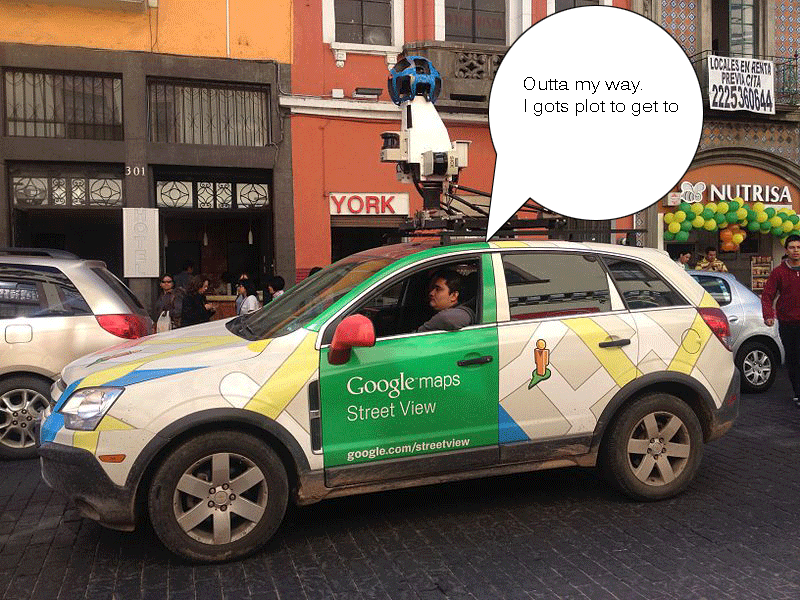
Call of the Battlefield is a vehicle for set pieces.

Ambiguous man is a vehicle for some story that you’re just a bystander in, watching the main actors propel the story forward. You go from scene to scene where the other actors talk to you, but are giving you the plot points that they’ve enacted at this point in the story. Sometimes you impose some driving force, but the story isn’t necessarily centered around you.

Mannequin

Continue reading “Game Design: Always with the Family Issues”

(YT) Game Design: Dissociative Camera (Electric Super Joy)

This is your Gaming on Data: League of Legends and Selecting a Champion

It’s not about your potential power, but the power that you display.

                Selecting which character you want to spend your gaming life with is a difficult choice, no matter how temporary the experience. You choose your character depending on what you think looks cool, what role you want to play as, what you think will get the job done when push comes to shove, how well you can synergize with your teammates. You’ll be spending the next game life becoming accustomed to your character and your team’s characters so you want to choose someone that you won’t regret spending that life as.
League-of-legends-logo

League of Legends is no exception to this, and with over 100 characters to choose from, 5 roles and a number of different play styles for each character and role, a player has a lot of choices to make in deciding how their next gaming-lifespan will be experienced. Not all play-styles work so some people take up the task of writing up guides on how they play, what works for them, what items to pick up and contingencies based on who you are playing with or who you are playing against. Sites like Champion Select, Solomid and Mobafire where guide writers impart their wisdom with certain characters and prospective new comers learn and rank what guides work best.

I’m not here to talk about which guides are better than others, but to research and impart knowledge of which characters the League Community likes best.

Continue reading “This is your Gaming on Data: League of Legends and Selecting a Champion”

Game Design: Enemy Agency Changing Player Agency

Broad agency is important to have in a video game. The ability to change your environment and change how you interact with it helps to set the game apart from how the player will experience one game over other games. That’s not to say that agency is the ultimate goal in all games. Plenty of games have very minimal agency and are still fun, ala Super Mario Bros. Agency is just another vector to follow in the pursuit of why we enjoy certain games. But the point of this isn’t to write about the player’s agency because that gets entirely too much focus. The agency of those that the player interacts with is equally important to focus on because it determines how the player will interact with the environment as well. The agency of the NPCs (non-playable characters) changes the agency of the player by changing the rules of interaction within the game.

Continue reading “Game Design: Enemy Agency Changing Player Agency”

Game Idea: Quick, turn the lights on

The Backstory

I don’t know if many of you can relate, but I remember when I was much younger being asked to grab something from the basement/garage. Aside from these rooms being the least occupied for the house’s lifespan, they were also the most cluttered of the house. So walking into the basement, you are already pretty unfamiliar with the room, but now you have to go looking for something in there. After rummaging around the shelves and boxes, you find whatever you were looking for and you need to leave the place. The problem is the light switch was at the bottom of the stairs and once you turn it off, the security of light was gone. The security of knowing what could be around you in an unfamiliar room was gone. The security of awareness vanishes and you’re left with your paranoia and hypervigilance to anything that could be living in the basement.

Continue reading “Game Idea: Quick, turn the lights on”

Blog at WordPress.com.

Up ↑