Search

GameIntrospection

Love and Hate for Gaming @GIntrospection

Tag

games

Game Design: MusicXGameplay – Playing a beat.

I’ve always had a soft spot for music games. The synchronous harmony of action and rhythmic reward, getting your movements in tune with the game. For many games, it’s not about progress through the game, but progress of the self. You can get to the end of the level on easy mode, but have you developed your reaction, fluidity equaling dexterity to get through the medium difficulty or harder? It’s about challenging yourself at the same pace as the music as much developing the skill and time-specific accuracy that makes me enjoy music games, in general.
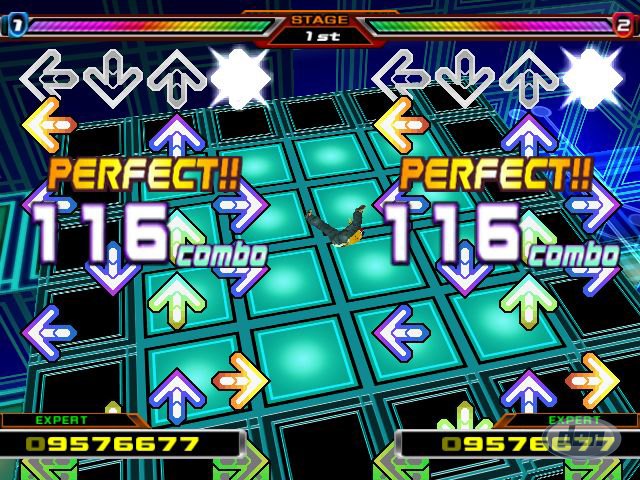
DDR
DDR
Rock Band 2
Rock Band 2

The formula helps create a deeper immersive-connection to the game as you play it because you’re forced to involve more senses to interact with one another and influence one another. In this case, you’re forcing your ears and your eyes to influence your movements and reaction time because every action corresponds to some beat.

But that doesn’t mean traditional music games are the only kids in the playground that try to force a player to express themselves with the rhythm that they exclaim.

Continue reading “Game Design: MusicXGameplay – Playing a beat.”

Let’s Talk About: Early Sonic

In preparations for a future project, I’ve been playing all of the old Sonic games for the Sega Genesis to get a feel for how the franchise has evolved over the years. These early Sonic titles were picked because they are widely regarded as being the better Sonic games and on the better side of platformers of the 16-bit generation. But somewhere on its march towards the present the series has consistently stumbled and tries to pick itself back up. But this interpretation of the Sonic’s past is a bit muddy because even at its roots, the games have been a playground of trial and error for how these games want to represent the Blue Hedgehog.

sonic over time

At least for the purposes of this article, I’m limiting the games to Sonic, Sonic 2, and Sonic 3.

Continue reading “Let’s Talk About: Early Sonic”

Thoughts on Gaming: Shared Experiences and Common Connections

There was a time in my youth that I remember only a handful of games that every kid had to have. Super Mario, Mario Kart, GoldenEye, Super Smash Bros, Unreal Tournament, Starcraft, Counter-Strike… Of course there were many other great games in the 90s and early 2000s, but there weren’t many that were ubiquitous among the community. You didn’t even have to be that good at all of these games, but you knew that somewhere during your weekend gaming hang-outs, one of these games would come up and you would spend the next few hours of raging and mocking over these games.

Old-Venn

But it also seems like there aren’t that many of these kinds of ubiquitous games around today. We have our Call of Duty annual wintertime jam, Super Smash Bros groups, League of Legend crews, World of Warcraft guildies, but these games being largely ubiquitous isn’t a given anymore.

New-Venn

Continue reading “Thoughts on Gaming: Shared Experiences and Common Connections”

Game Design: Verbosity, Empathy, and Implied Information

I’ve talked about dialogue delivery in the past and how it can become a hindrance when perception and expectation don’t match, but playing story-driven games like To the Moon  and A Bird Story  has helped to drive home the idea that many modern games rely too heavily on being verbose in their story telling. Long winded narration and dialogue used to inform the viewer every little detail that’s going on within the story. Background that we absolutely need to understand the story in full depth </sarcasm>.

TTM4

What makes these two examples great is their ability to become interesting because of the lack of dialogue in each game.

Continue reading “Game Design: Verbosity, Empathy, and Implied Information”

Hipsterism, Progress, and Gaming

“Those Filthy Hippies”

The Hipster movement is nothing new, but the name certainly does change among generations. Beatnik, Hippy, Punk. Having a culture that actively pushes against the mainstream is important to have, not because having a contentious disdain for the status quo is generally a healthy lifestyle, but because it leads to new styles of art being actively developed in protest of the status quo.

The general counterculture cycle is this: something becomes mainstream -> counterculture goes against the mainstream -> new art style develops -> art style becomes popularized -> style becomes mainstream.

Most new art styles are evolutions of but also direct responses to the previous art styles. The more that the mainstream leans towards something, the more there is a pull in the opposite direction from this counterculture.

Continue reading “Hipsterism, Progress, and Gaming”

Game Design: Introducing your characters (what rapport do you speak of?)

A foggy night with a pale moonlight shimmers among still water. Murmuring in the distance interrupts the tranquil silence. A ripple in the water catches your eye and you trace it back to where you think it came. The camera closes in on your face as you try to make out what could be ruining the tranquility of the scene.

Introducing your character into a story is important to give a grounding for who the player will control and their significance to the story. Will I be analyzing my character or the story around them? Will I be able to impose any free will through them? Are they reliable, are their perceptions to be trusted?

You not only establish a rapport with the character but you establish the ground rules for interaction with them.

Continue reading “Game Design: Introducing your characters (what rapport do you speak of?)”

Game Design: Always with the Family Issues

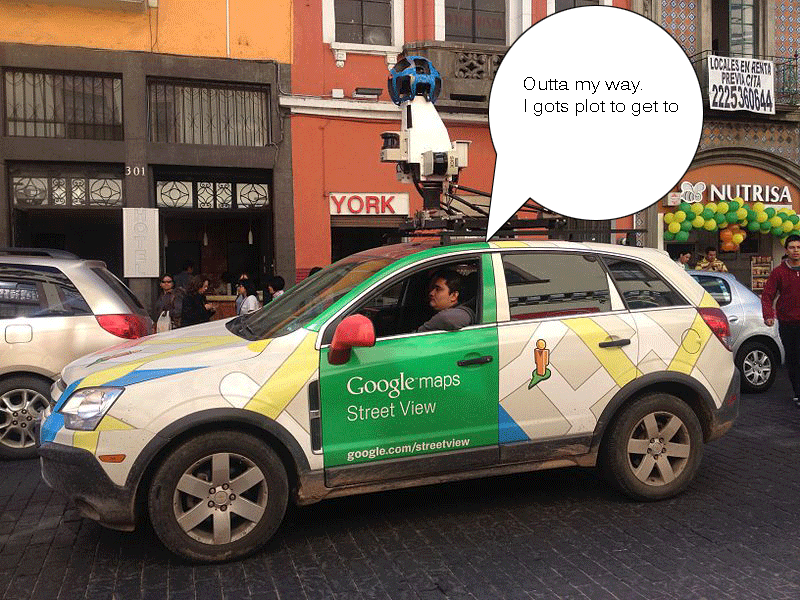
Load up a game, any one that is story driven, and find yourself in a world where your main character is either a mercenary/soldier, a camera vehicle for a larger story, or a single white male father/ex-father figure type.

camera-on-car

Call of the Battlefield is a vehicle for set pieces.

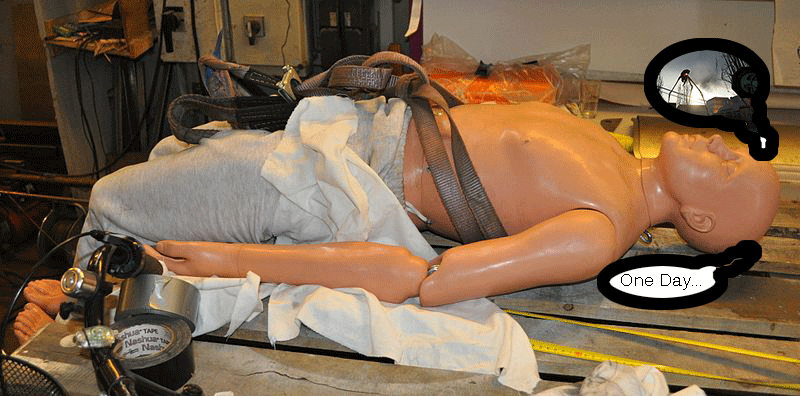
Ambiguous man is a vehicle for some story that you’re just a bystander in, watching the main actors propel the story forward. You go from scene to scene where the other actors talk to you, but are giving you the plot points that they’ve enacted at this point in the story. Sometimes you impose some driving force, but the story isn’t necessarily centered around you.

Mannequin

Continue reading “Game Design: Always with the Family Issues”

PAX and E3 – A difference in Atmosphere

I think it’s just a difference in who is attending, but there is a different energy around events like PAX compared to events like E3. PAX has a much larger gamer attendance than the heavy industry-centric E3 and with the lack of stability around the gaming industry lately, it has affected the mood of everyone going.

Yum yum in my thumb thumb.

Everyone going still gets excited for the games that are announced and we are eagerly waiting to get our hands on the next potentially great game, but there used to be an extra energy from just being there. I’ve only been around PAX for a few hours already, but the difference in climate across attendees is much more noticeable than in years prior. Everyone isn’t just excited to playtest something that isn’t even out yet, or to just meet some of their favorite gaming personalities, but they are genuinely excited to be here in Seattle and attending PAX.

Continue reading “PAX and E3 – A difference in Atmosphere”

Forever a Fan: A game’s constant reprise to mind

A funny thing happens when I walk by an arcade. My neck cranes, scanning the room and if I gaze on a series of the flashing arrows scrolling up a screen my eyes lock onto the machine and my body tries to move towards the machine on instinct. The feeling intensifies if the machine happens to be part of the few generations that had the best track list, but regardless of the version there is always an urge and a rush of the good brain chemicals that get me feeling excited and anxious to hop on the machine and give it another round for old times sake. The machine, if you hadn’t guessed was a DDR machine. If you talked to 13-year-old me and told him that I’d be working at a place where there were several DDR machines in the area with easy access to, he’d be ecstatic because what 13-year-old me thought was that I’d be a fan of the series for life. Maybe that was immature thinking, but the more places that I pass where there’s a DDR machine there or the disappointment that I find when there isn’t when I’d thought there would be, the more I believe I had it right back then, though my reasoning was wrong for it.

You can call it nostalgia or not being able to let go of past experiences, but there are many groups among the community that live with their game of choice and have become “Forever Fans” of their game.

Continue reading “Forever a Fan: A game’s constant reprise to mind”

Create a free website or blog at WordPress.com.

Up ↑