
I got bored and made a video for the last post about Grow Home. It has a silly with video and voices. =)
Transcript can be found here
I got bored and made a video for the last post about Grow Home. It has a silly with video and voices. =)
Transcript can be found here
There is no competition, there is no worry, there is only your task at hand, to Climb and the Grow.

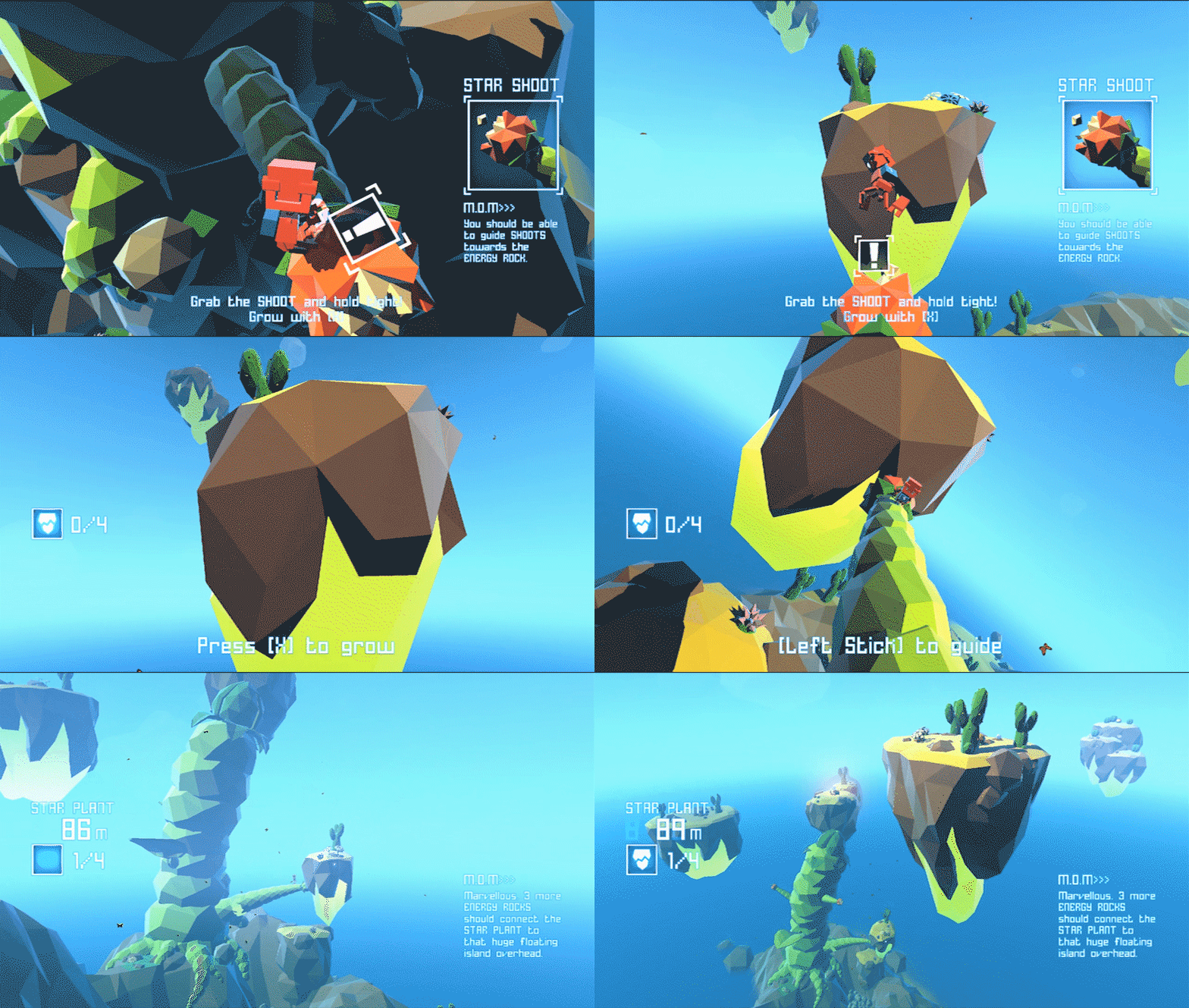
Samu, the Zen practice of physical work, through doing, being present and in the moment, leading to an enlightened Zen state. Grow Home embodies this perfectly. Grow Home is the latest in Experimental Games from Ubisoft following Child of Light, and has you with the only real goal of growing a giant plant by plugging its seeds into the floating rocks with glowing Zelda beacons by climbing up the plant and riding the seed to implantation.
In preparations for a future project, I’ve been playing all of the old Sonic games for the Sega Genesis to get a feel for how the franchise has evolved over the years. These early Sonic titles were picked because they are widely regarded as being the better Sonic games and on the better side of platformers of the 16-bit generation. But somewhere on its march towards the present the series has consistently stumbled and tries to pick itself back up. But this interpretation of the Sonic’s past is a bit muddy because even at its roots, the games have been a playground of trial and error for how these games want to represent the Blue Hedgehog.

At least for the purposes of this article, I’m limiting the games to Sonic, Sonic 2, and Sonic 3.
For a game with such a great ambiance, able to illicit a darkened intrigue in the splattered scenary, macabre imagery and imaginative reality bending, the game shows that it has a clear vision for itself in some aspects. The problem is that this clarity is only in its presentation, but the game’s execution is all over the place.


Game: Super Time Force Ultra
Genre: Action Bang-Bang Platformer
On: XBLA, Steam: http://store.steampowered.com/app/250700/
Everything about Super Time Force Ultra (STFU) is be taken with a dash of fun, from the combat, to the setting, to the dialogue from Commander Repeatski.

Game: Azure Strike Gunvolt
Console: 3DS
Genre: Action-Platformer

Azure Strike Gunvolt is a redesign of classic Megaman X style gameplay with an evolved sense of difficulty. The bosses are varied and difficult, with is no “preferred kill-order” because power-ups from bosses don’t equate to weakness for later bosses. The platforming is well designed and the new battle mechanic is quite unique, but can get repetitive. What all of this means, I’ll get into in a bit.


The Wii U version of Super Smash Bros was fine. If you’ve played any other version of Smash Bros’s Free-For-All, than you know exactly what to expect. On a side note, Wii-Fit Trainer is pretty strong.

The 3DS Version of the game, however, was a mixed bag. There were two kinds of stations, the Free-For-All station and the Smash-Run Station. I opted for the Smash-Run station to try my hand at something different… (SO MUCH WAITING) After each demo ran for about 6 minutes, with 3 people in line per station, and what you get is a timed labyrinth with enemies akin to those found in Subspace Emissary from Super Smash Bros Brawl where you collected stat-increases to help you fight in a Free-For-All against the CPU after the labryinth section was complete. It helped that I picked a fast character so I can at least have mobility on my side and explore the maze as much as I could in the 5 minutes alloted, but with a slow character this game mode feels opposite the pace of what Smash Bros is used to. Multiplayer smash bros is a game of high-intensity, fluid, frantic, fun but this game mode is anything but that. I don’t want to say it’s as bad as how Sonic turned itself into, because they made A LOT of strange design changes to get that to happen. But, Smash-Run is definitely not as enjoyable as the FFA modes because the mechanics of the characters aren’t designed for exploring and traversing, but for combat with a character in front of you. Guilty Gear tried designing the same explore+beat-em-up in GG:Isuka and that mode was pretty garbage as well, but they also understood that exploration was going to be slow and limited. We’ll have to see when the game gets dropped later in October 2014.
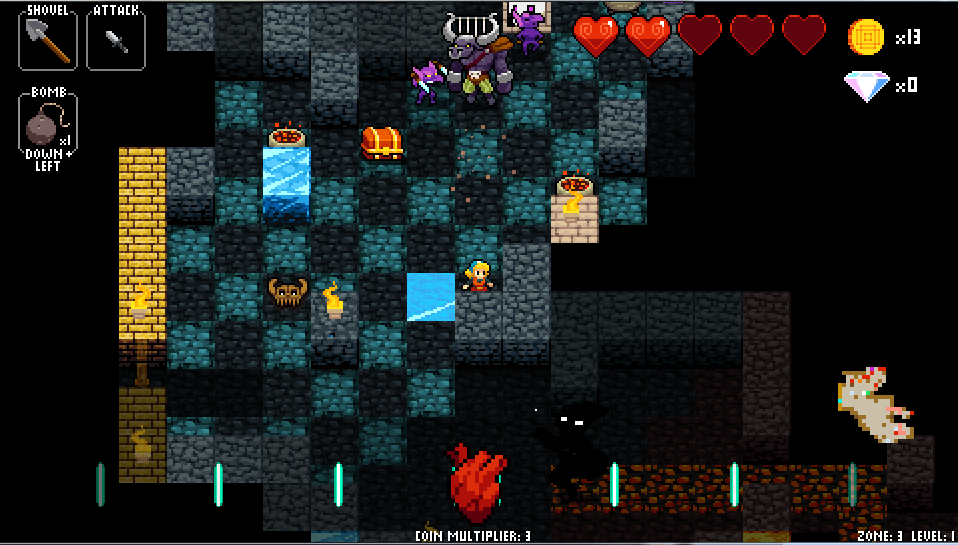
The game came out about a month ago on Early Access Steam (7/30) and I didn’t know how I wanted to approach the game at first. The game is fun, the music is addicting but I found myself turning away from playing it from time to time. For a rogue-like, it does its job of creating a high-replayability by having generated dungeons for all stages, daily challenges, and different playthrough experiences because of the randomized weapons, power-ups and enemies.

What I was shying away from was the other part of rogue-like games, the “keep you on your toes” part. The game’s mechanics are simple. You move to the beat. You attack to the beat. You create paths through walls to the beat. But this also means that you learn about your enemies to the beat. Once you get past the first few enemies learned through the tutorial, you quickly find enemies where you don’t know their attack patterns and movements. Normally, when you come across something that you’ve not experienced prior, you can take your time to figure out how to approach these kinds of enemies, but with the restrictions of actions per beat, timed length of the song/stages and other enemies trying to eat your face by throwing their heads in your direction, it makes it difficult to learn and understand an enemy. It makes it even more frustrating when you die to that enemy and you haven’t learned a gosh-dern thing about how or why you died.
Continue reading “Let’s Talk about: Crypt of the Necrodancer”
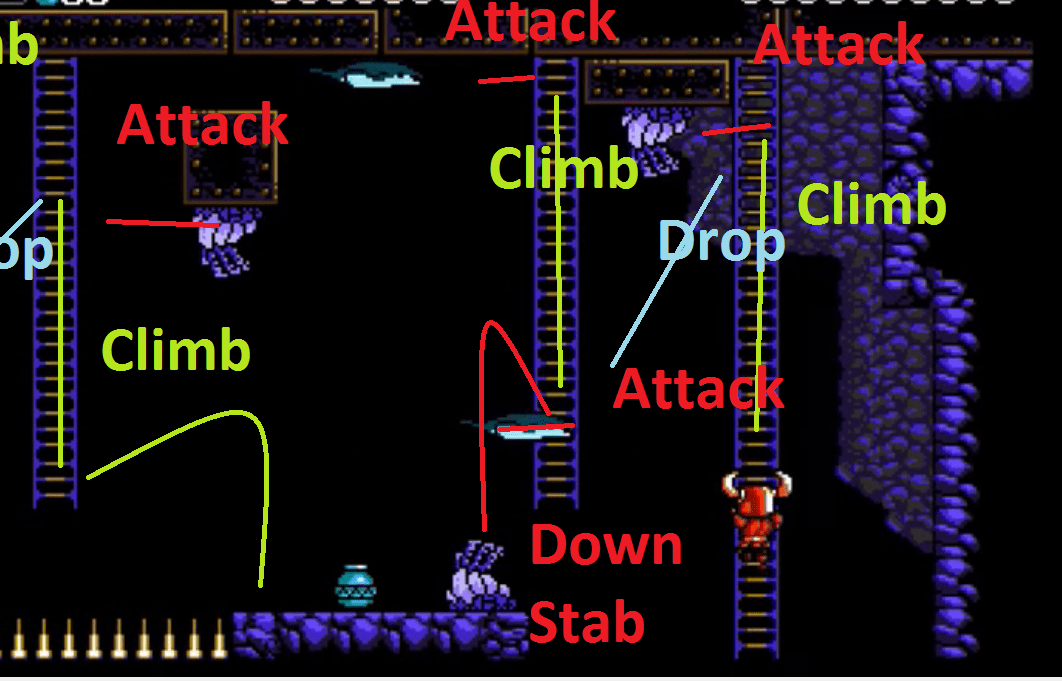
I know I talked about it before, but Shovel Knight is probably one of the few games this year that I was hard-pressed to put down. Aside from being a fun Castlevania-Megaman style Platformer, attached is a great soundtrack, a style that references games of the past but is still able to carve out its own image and gameplay that is never “too easy” or “too hard” but consistently finds the middle ground to keep the player lingering in the “I know I can complete this” mentality.

 GameIntrospection